About Dr. Rachael Van Pelt

25 years studying successful aging.
One discovery that changed everything.

I spent 25 years running clinical trials on aging. I published the papers. I secured the federal grants. And somewhere around year twenty, I noticed something none of my research was designed to measure.

The women who volunteered for my studies (postmenopausal women who gave seven hours in a hospital room so I could study their physiology) would tell me about their lives between the blood draws. About the house that felt too big now. About the stairs that used to be nothing and were starting to feel like a risk. About the mortgage payment that made sense when two incomes were flowing and didn’t anymore. About the neighborhood that had gotten quiet since the last friend moved away.

They were doing everything right: exercising, managing their nutrition, staying on top of their labs. And their home was quietly undoing the work.
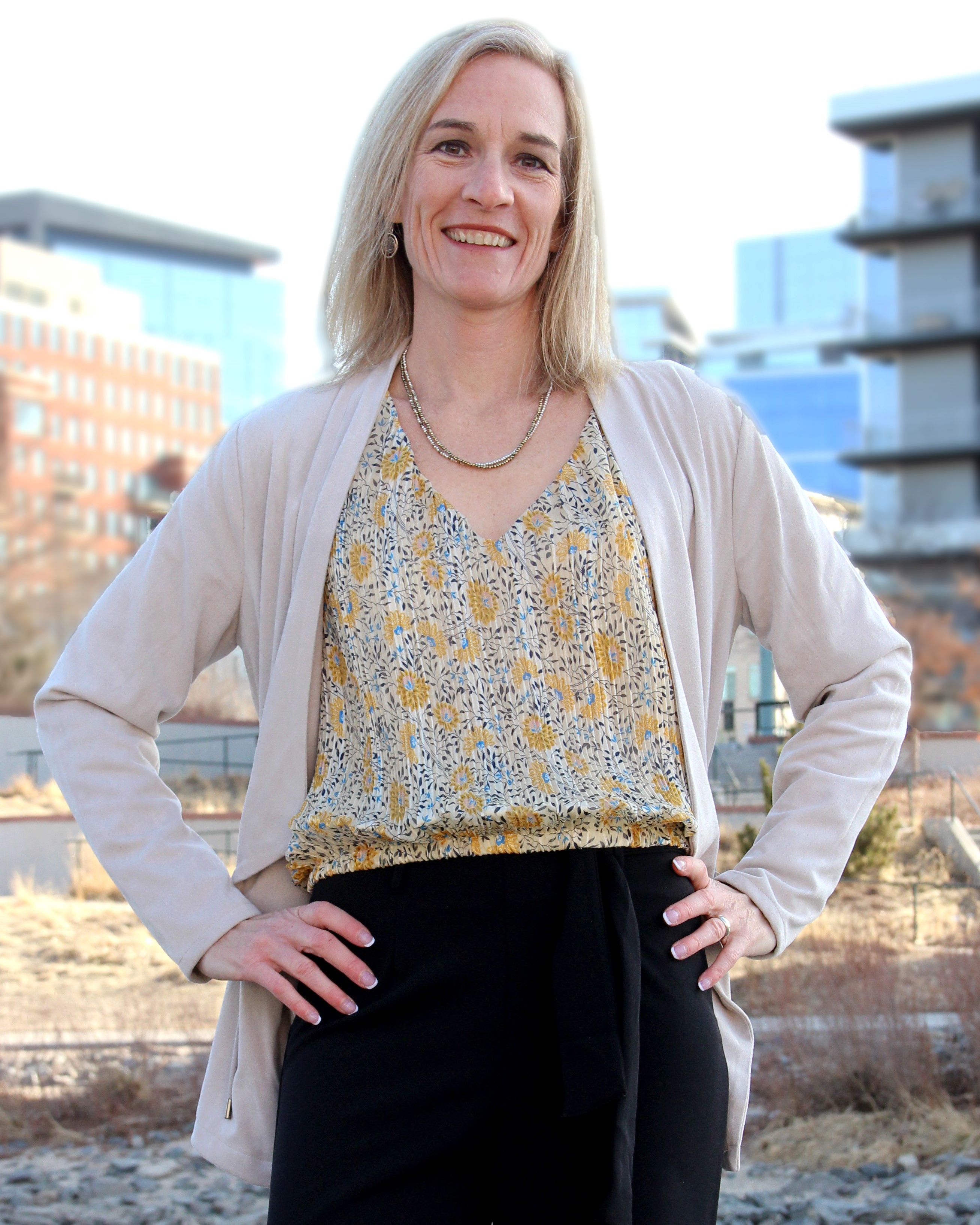
Dr. Rachael Van Pelt, healthspan scientist

Your home is not a backdrop to your health. It is a biological input shaping how much you move, how well you sleep, how isolated or connected you feel, and how much chronic stress your body absorbs every single day.

The Research That Brought Me Here

Two contested questions. One pattern.

I earned my PhD in Integrative Physiology at the University of Colorado and spent 20+ years leading federally funded clinical trials at the University of Colorado School of Medicine. My lab was continuously funded by the National Institutes of Health. I published fifty-eight peer-reviewed papers. I sat at the center of two of the most consequential (and contested) questions in women’s health.

Body fat distribution

The prevailing wisdom said less fat was categorically better. My data said something more complicated: not all fat is created equal. Femoral fat (the fat women have been culturally trained to despise) is metabolically protective. Decades of messaging told women to hate their thighs. The science suggested those thighs might be quietly protecting them from heart disease.

Hormone replacement therapy

When the Women’s Health Initiative shut down early in 2002 and declared HRT dangerous, millions of women were told to stop treatment. My research showed the real variable wasn’t the hormone. It was timing. Estrogen given early in menopause was beneficial. Given late, it was harmful. Mainstream medicine has spent two decades catching up to what our data already showed.

Both discoveries taught me the same lesson: the dominant narrative is often wrong, oversimplification does real harm to real people, and the woman sitting across from you deserves better than a headline.

Why I Left the Lab

The bottleneck was never the science. It was translation.

I walked away from a landmark NIH study and a well-funded career because I realized that gathering more molecular evidence behind what we already know would not get a single additional person to act on it. We know physical activity is beneficial. We know social isolation accelerates cognitive decline. We know chronic stress shortens healthspan. The problem was never the evidence. The problem was getting the right framework to the right person at the right moment — before a health event, a financial strain, or a family crisis made the decision for them.

I left academia. I never stopped being a scientist.

A scientist thinks in systems, questions dominant narratives, follows evidence over convention, and updates her models when the data changes. I do all of that every day. The difference is I no longer need a grant committee to validate the question before I’m allowed to investigate it.

The distinction that matters:

I stopped being an academic, which is a different thing entirely from being a scientist. Academics publish for committees. Scientists follow problems wherever the evidence leads — even when it leads to a real estate license.

The Proof I Didn’t Ask For

This is not abstract research. This is my family.

While I was building my practice, my father was diagnosed with end-stage cancer.

I watched him try to navigate a large rural property while he was dying. The long trips into town for healthcare. The isolation of a home that had seemed perfect when he was healthy and became a burden when he was not. In his final months, one of his greatest stresses wasn’t his illness. It was the housing situation he was leaving my mother to manage alone. Too big. Too expensive. Too far from the help she would need.

My mother is eighty now. She is still in that property. She is not in crisis. But she is not in an ideal situation for the years ahead, either. She is exactly the person I spend every working day trying to help my clients avoid becoming: someone whose housing decision was made proactively once and hasn’t been revisited since, while the years and the circumstances quietly changed around it.

What I Do Now

The Go-Strong window is finite. I help you use it.

I help adults 55+ evaluate whether their home is supporting or undermining their healthspan, their wealthspan, and their Next Act.

The window between roughly 55 and 67 (what I call the Go-Strong decade) is when your health is still improvable, your financial options are still wide, and your capacity to manage a major transition is at its peak. Every year you wait past this window, the options narrow and the costs (financial, physical, emotional) go up.

Most people assume staying put is the safe choice. The data says otherwise. The longer you wait, the fewer options you have — and the more expensive the ones that remain.

My work is organized around the four forces your home acts on — Body, Brain, Bank, and Base (your home and where it sits) — because rightsizing is not about shrinking your life. It’s about right-fitting your environment so you can do more of what matters, for longer, with less friction.

I am not a Realtor who understands health. I am not a health coach who sells real estate. I am a scientist who followed the evidence to an uncomfortable conclusion and built a practice around it.

The question isn’t can I afford to move? The question is: can I afford to wait?

Free, 5-minute assessment. See where your home is working — and where it isn’t.

The Rightsize Mindset

A framework for the decision most people never make deliberately

Rightsizing is not a real estate transaction. It’s a decision about what environment gives you the best chance at the life you want in your next chapter — one you make with full information, before circumstances force a lesser version of it.

The four forces your home acts on are Body (movement, fall risk, physical capability), Brain (cognitive engagement, stress load, emotional safety), Bank (carrying costs, equity, financial flexibility), and Base (community, social connectivity, proximity to care, access to the people and places that matter). These don’t operate independently. A home that scores well on Bank but poorly on Body and Base is not a good fit. A good fit means alignment across all four.

The Go-Strong window is the frame. Most people spend it assuming they have more time. The data says: use it deliberately, or lose it quietly.

See how we work together →

Dr. Rachael Van Pelt

Integrative Physiology, University of Colorado

Healthspan Scientist · Rightsizing Strategist · Licensed Realtor, eXp Realty


Host of The Next Act Ninjas Podcast

100+ episodes on the science of aging well, the housing decisions that shape your next chapter, and the frameworks that help you act before a crisis decides for you.

Also on Spotify · Apple Podcasts